
Your temperature has been
telling you a story all along.
Basal body temperature won't predict ovulation — but read correctly, it confirms what already happened inside your cycle, and tells you a great deal about your hormonal and TCM landscape along the way.
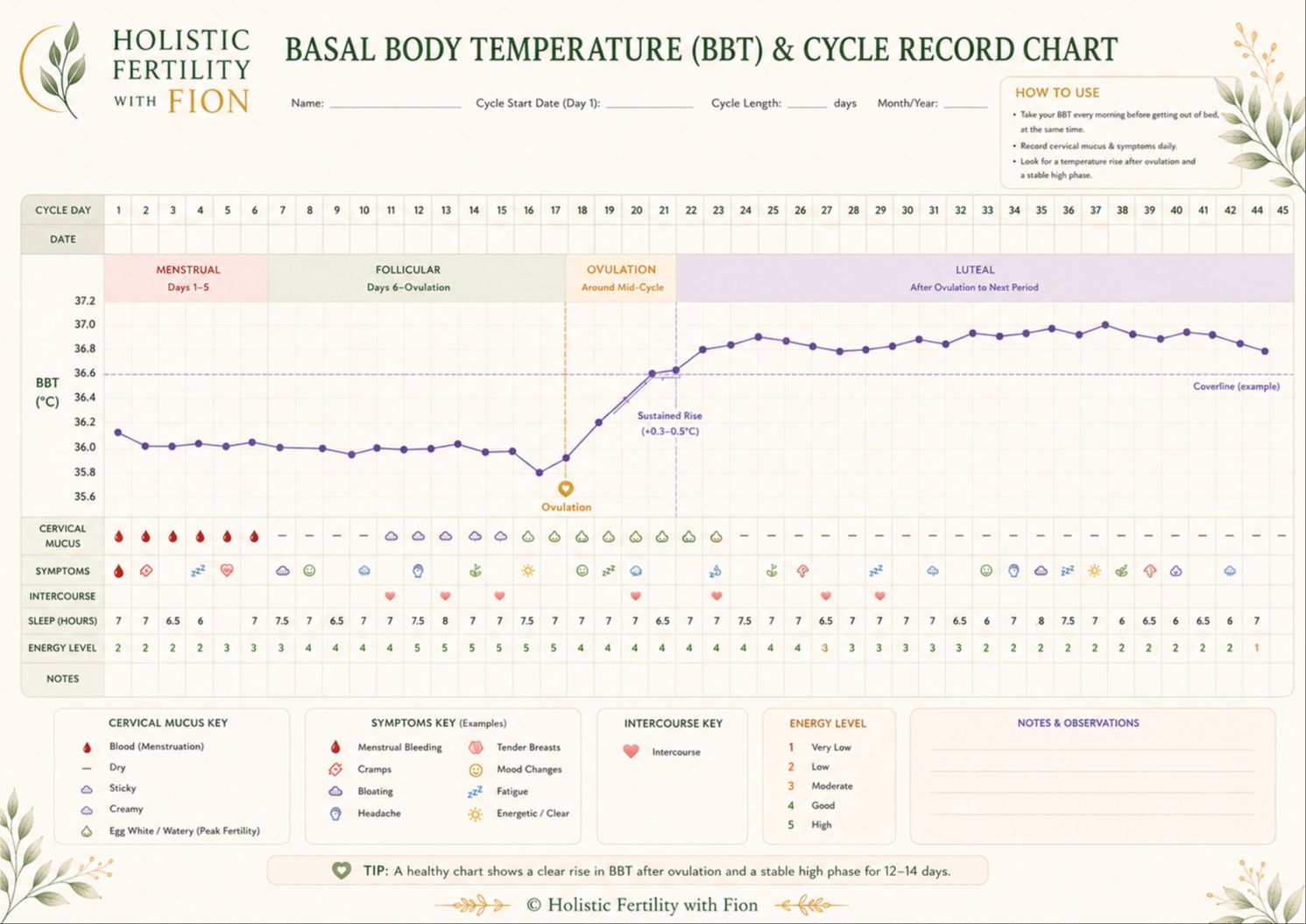
What basal body temperature actually measures
Two hormones, one thermostat.
Basal body temperature (BBT) is your body's resting temperature, taken first thing in the morning, before you get out of bed, move around, eat, or speak. It is the lowest, most stable reading your body produces in 24 hours — which is exactly why it's useful. It strips away the noise of digestion, movement, and stress, leaving a fairly clean readout of one thing: which hormone is currently dominant in your cycle.
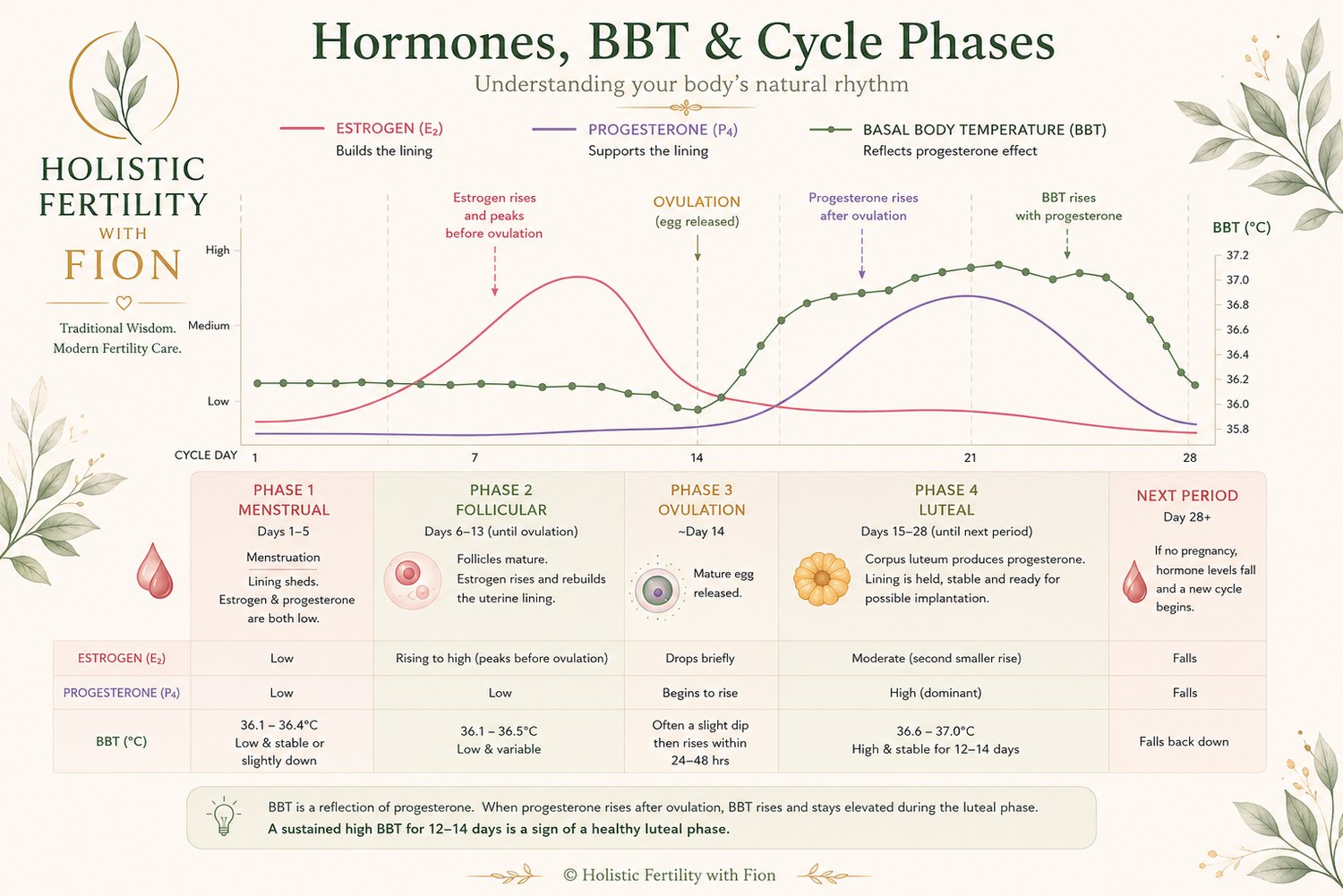
Before ovulation
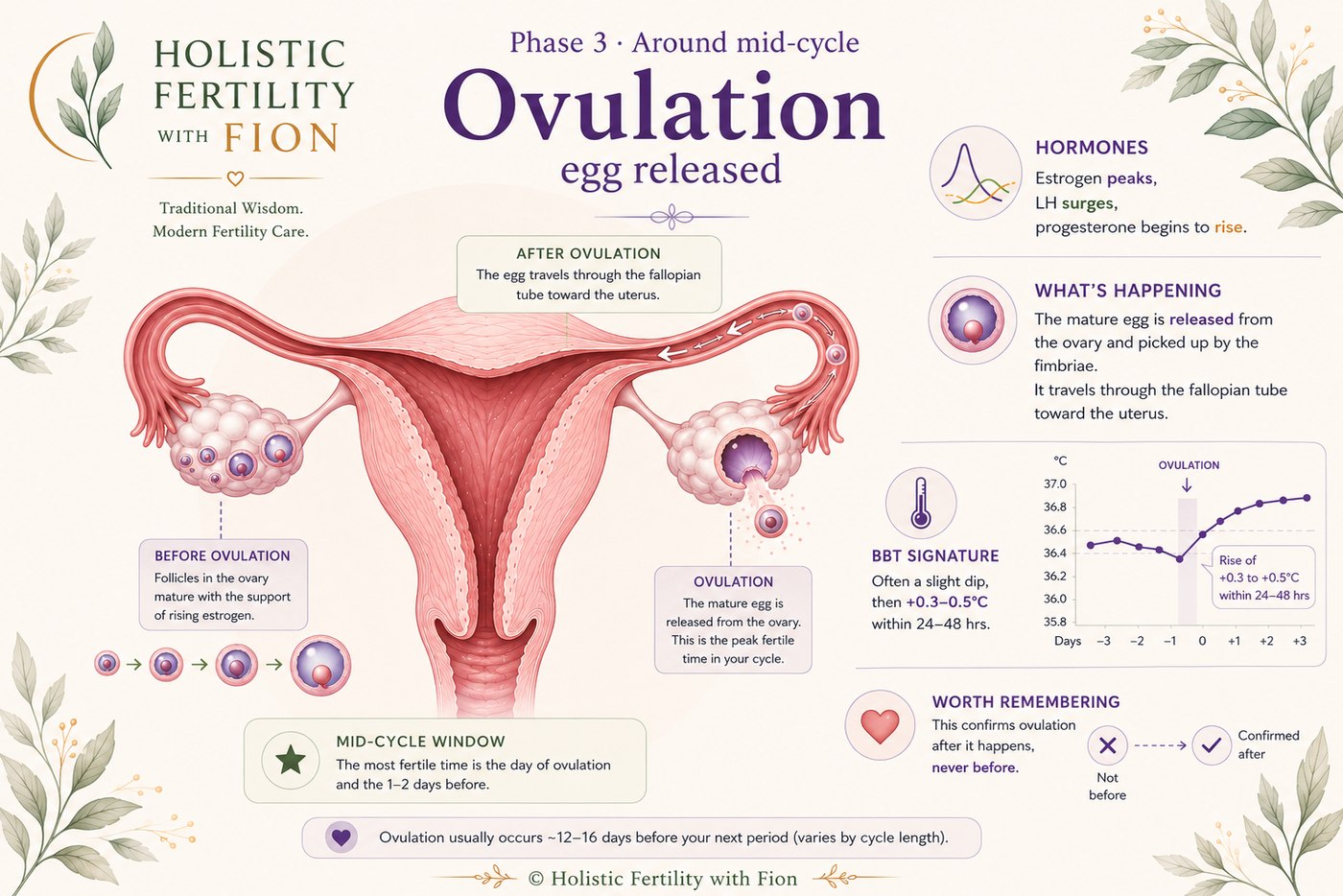
Estrogen is dominant. Estrogen has a mild cooling effect, so BBT sits lower and fairly flat.
After ovulation
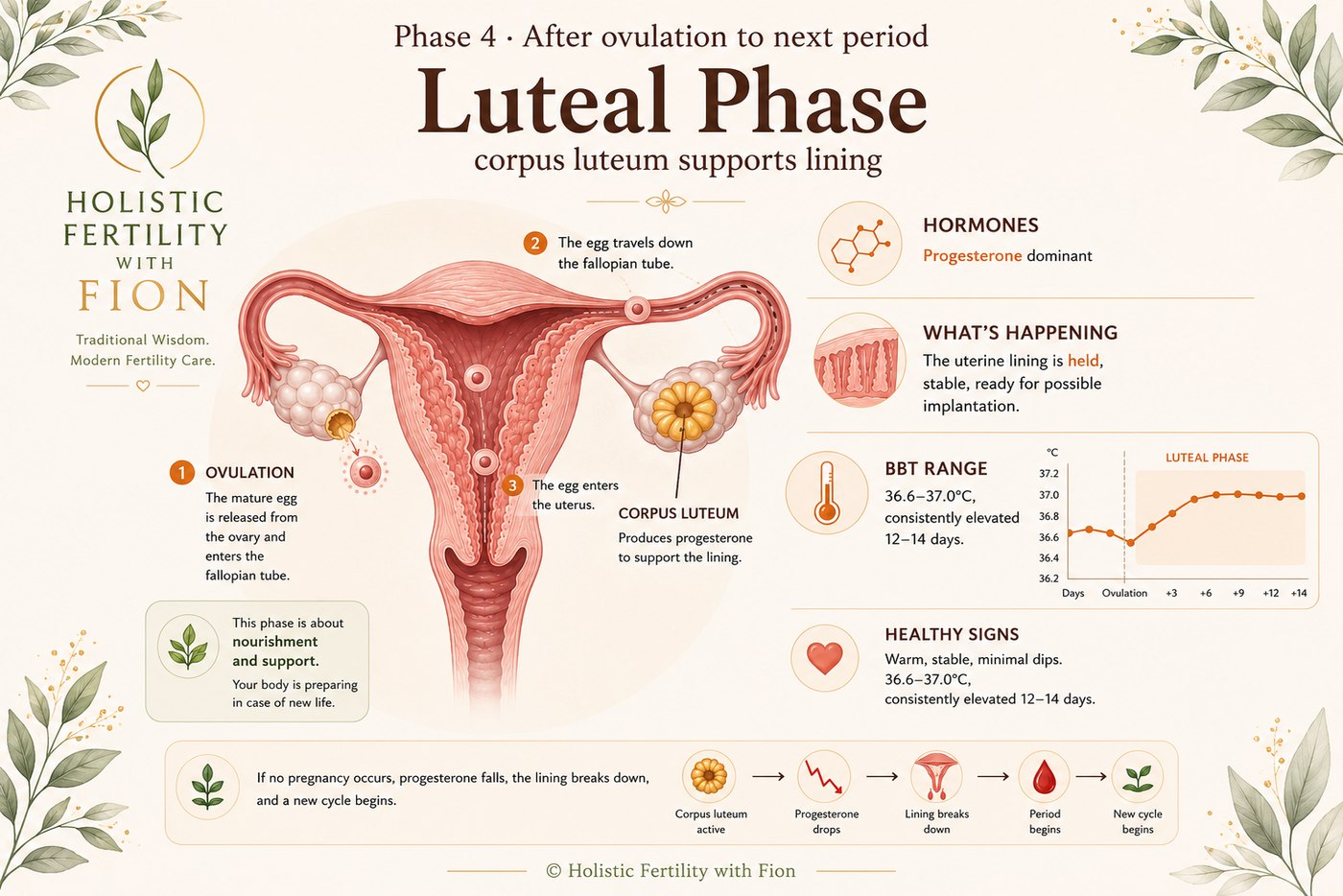
Progesterone takes over. It raises temperature by roughly 0.2–0.5°C, and holds it there for the rest of the luteal phase — the back half of your cycle.
That shift from a lower, flatter pre-ovulation phase to a higher, steadier post-ovulation phase is called a biphasic pattern. Seeing it confirms three things at once: that ovulation happened, roughly when it happened, and that progesterone rose enough afterward to be detected.
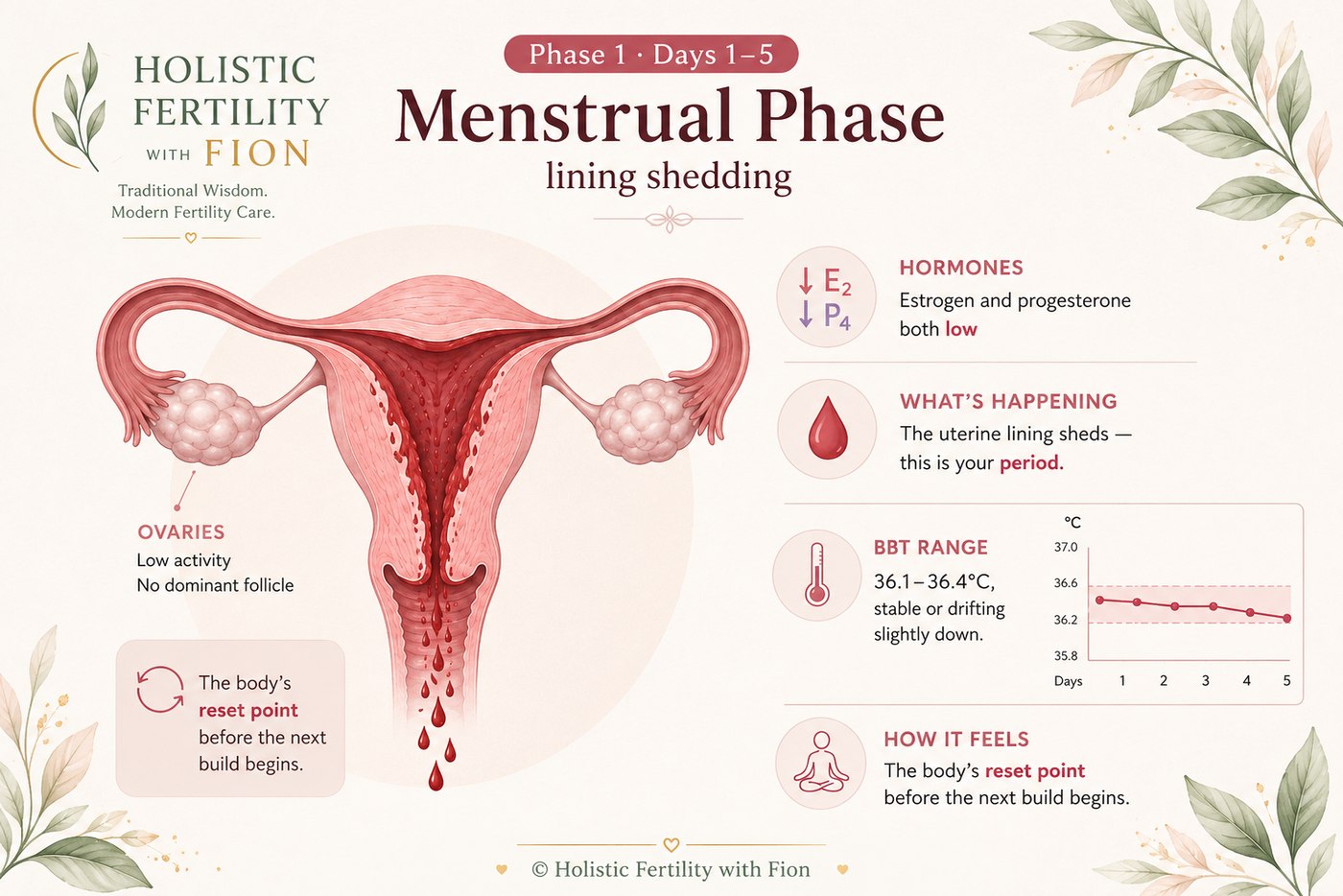
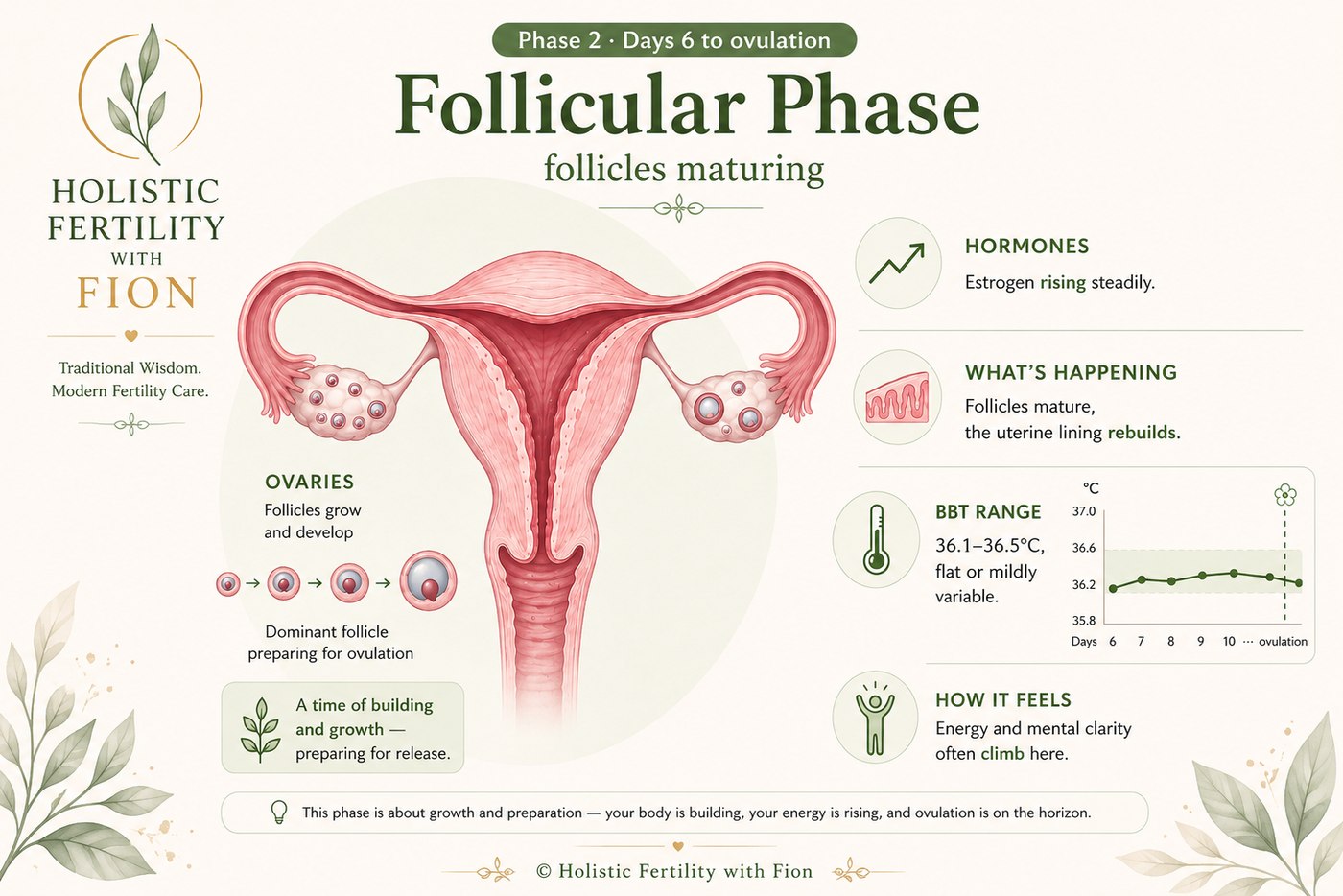
The four phases, hormone by hormone
How to measure BBT correctly
A temperature reading is only as useful as the conditions around it.
BBT moves in tenths of a degree. Small inconsistencies in how you take it can hide or fake the very pattern you're trying to see — so the method matters as much as the number.
Use a basal thermometer
One that reads to two decimal places (e.g. 36.42°C). A regular fever thermometer isn't precise enough to catch the 0.2–0.5°C shift you're looking for.
Take it the moment you wake — before anything else
Before sitting up, talking, checking your phone, or getting out of bed. Keep the thermometer on your nightstand so you can reach it without moving much.
Aim for at least 3 hours of continuous sleep beforehand
Less than that, and the reading reflects disrupted sleep more than your hormonal baseline.
Take it at roughly the same time each morning
Within about a 30-minute window if possible. Temperature naturally drifts across the early morning hours, so consistency matters more than which exact time you choose.
Log it immediately, alongside anything that might explain a swing
Alcohol, a late night, illness, travel, or an unusually warm room can all shift a single reading. Note it next to the number — it'll matter when you're reading the pattern later, not the day.
What your temperature curve means in Traditional Chinese Medicine
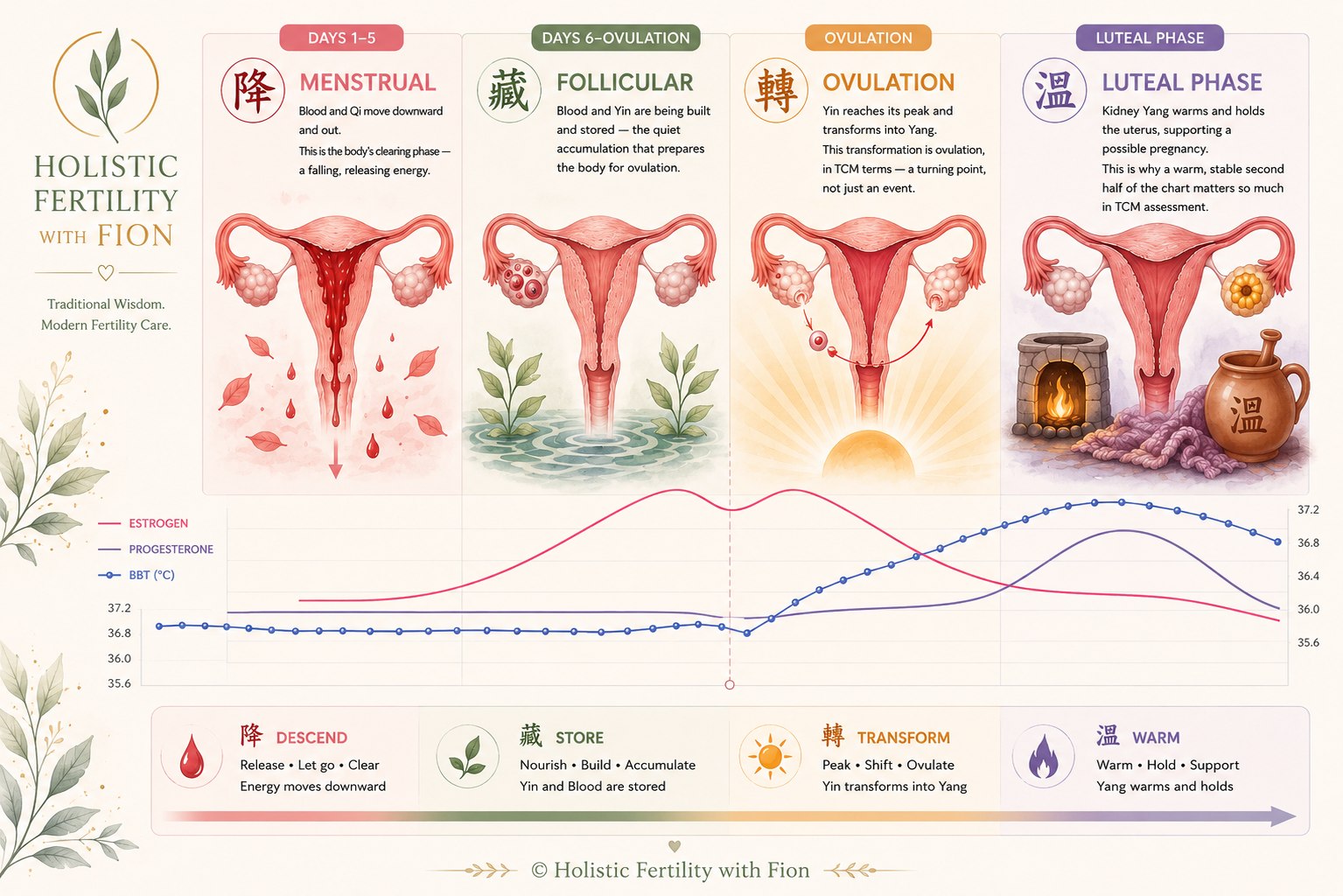
Biomedicine and TCM are describing the same rhythm from two different vantage points.
In Western physiology, the cycle is a story of estrogen and progesterone. In TCM, the same monthly rhythm is read as the ebb and flow of Yin and Yang, carried by Qi (vital energy/movement) and Blood (the nourishing, material substance — related to, but broader than, blood in the biomedical sense).
Symptoms, in TCM terms
These are starting points for a conversation with your practitioner, not a self-diagnosis. The same symptom can have more than one underlying pattern.
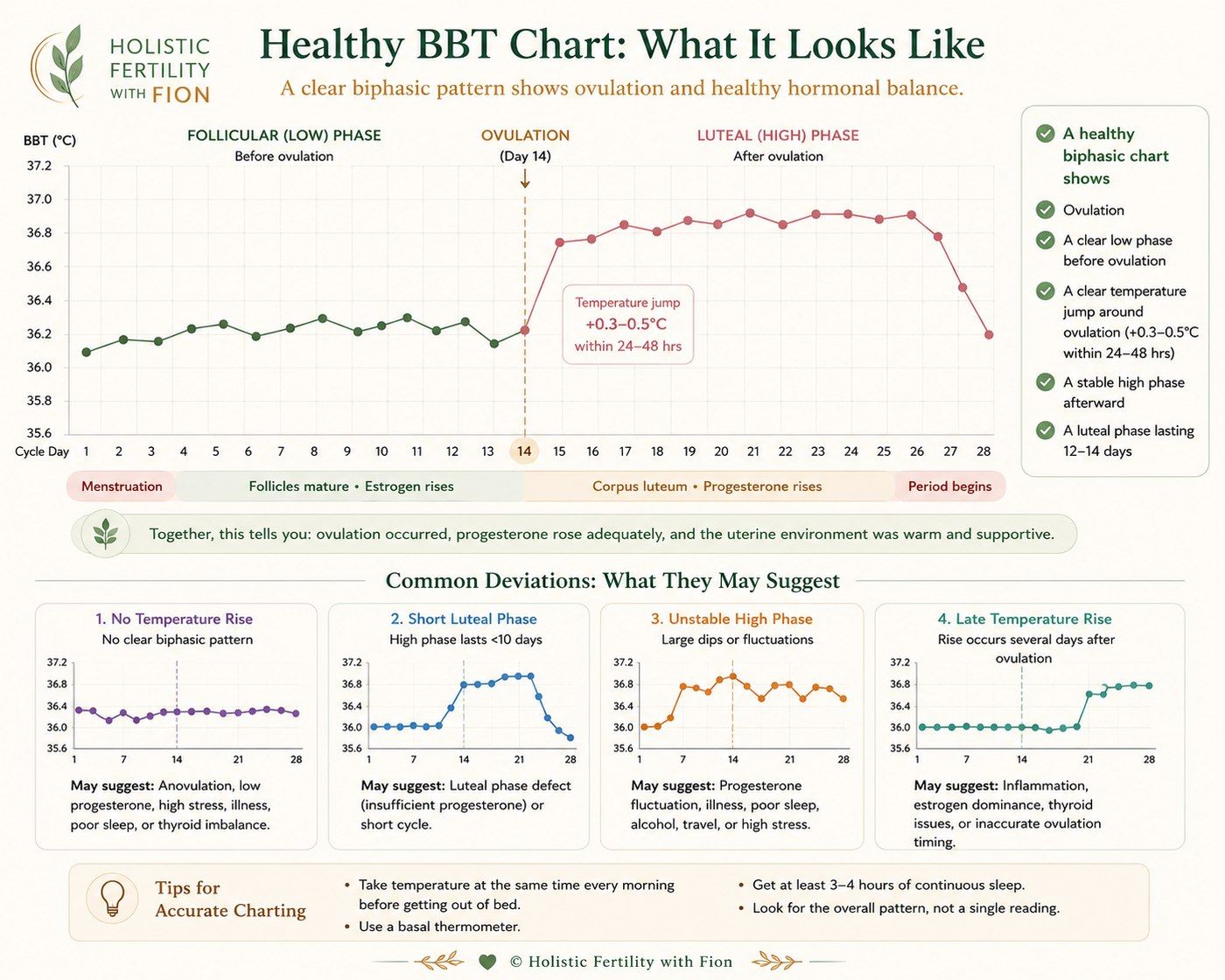
What a healthy chart looks like — and what common deviations may suggest
Know what you're looking for before you start logging. It makes the chart far easier to read later.
The same deviations, through a TCM lens
A complementary way to read the same patterns above. Each has several possible explanations — a single unusual cycle is normal; a pattern repeating across 2–3 cycles is what's worth bringing to your practitioner.
〜No temperature rise
⏱Short luteal phase
⚡Unstable high phase
↗Late temperature rise
Log your cycle, see the pattern
Enter your daily readings below. Everything stays in this browser tab — nothing is saved, stored, or sent anywhere. Refreshing the page clears it.
This tool is educational and does not diagnose or replace individualised assessment by a qualified practitioner. If you have concerns about your cycle or fertility, please discuss your chart with your TCM practitioner or doctor. — Holistic Fertility with Fion