How to Identify Your Fertile Window Naturally: The Complete Guide to Cervical Mucus and BBT Tracking
Apr 03, 2026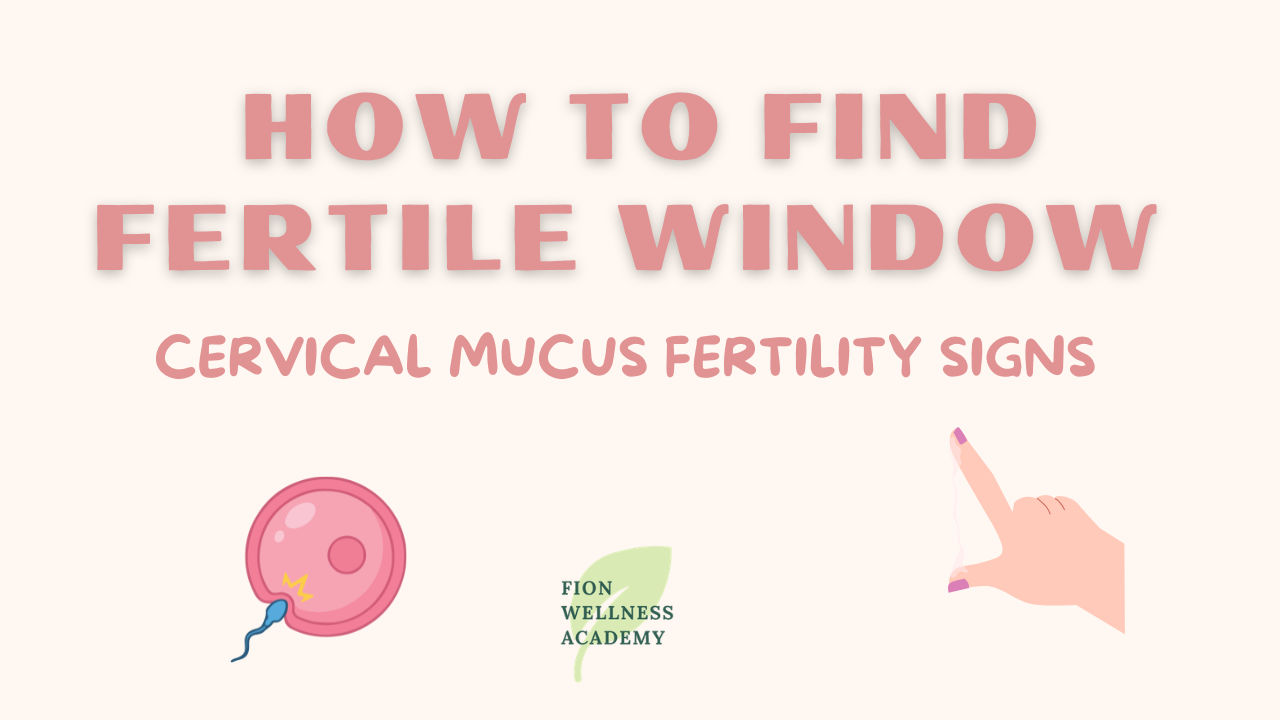
(By Fion Lam, Dip Ac TCM, BN | Acupuncturist, Chinese Herbalist & Fertility Coach )
One of the most common things I hear from women who are trying to conceive is this: 'I know I should be timing it around ovulation, but I don't really know when that is.'
They are tracking apps. They are counting cycle days. But they are not reading the real-time signals their body is sending — and those signals are far more accurate than any calendar.
In this article I am going to teach you the two most important fertility tracking methods: cervical mucus observation and basal body temperature (BBT). Together, these give you a clear, accurate picture of your fertile window every single cycle.
First: What Is the Fertile Window?
The fertile window refers to the five days before ovulation plus the day of ovulation itself — approximately six days in total. This is the only time in your cycle when conception is biologically possible.
Here is the biology behind it:
- Sperm can survive inside fertile cervical mucus for up to 5 days
- The egg survives for only 12 to 24 hours after ovulation
- This means sperm need to already be present when the egg is released
Even with perfect health, the chance of pregnancy per cycle is only around 20 to 30 percent. Mistimed intercourse is one of the most common — and most overlooked — reasons couples struggle to conceive.
The key insight is this: ovulation does not always happen on day 14. It can shift due to stress, illness, travel, poor sleep, nutritional deficiencies, or hormonal imbalance. This is why tracking your own body signs is so much more reliable than counting days.
Method 1: Cervical Mucus — Your Most Important Fertility Sign
Cervical mucus is produced by glands in the cervix under the influence of oestrogen. It changes in quantity and quality throughout your cycle in a predictable, hormonally driven pattern. These changes are your body's real-time fertility forecast.
The progression through your cycle
Dry phase (post-menstrual)
After your period, oestrogen is low and you may notice little or no discharge. This is an infertile phase — sperm survival is very limited without mucus present.
Sticky or creamy phase (pre-fertile)
As oestrogen begins to rise, you may notice sticky, tacky, or creamy white discharge. This is a transitional phase — fertility is possible but low. Sperm survival improves slightly.
Fertile phase — egg-white mucus
As ovulation approaches, mucus becomes clear, slippery, and stretchy — similar in appearance to raw egg white. This is your most fertile sign.
This fertile-quality mucus is not just a sign of ovulation — it is essential for fertility. It protects sperm from the acidic vaginal environment, nourishes sperm, helps them swim upward toward the egg, and can keep sperm alive for up to 5 days. Without it, sperm survival drops to just a few hours.
The last day of slippery, stretchy egg-white mucus is called the Peak Day — and it usually occurs one day before or on the day of ovulation. This is your most fertile day.
Post-ovulation
After ovulation, progesterone dominates and mucus quickly becomes thick and dry again. This is the infertile phase of your cycle.
How to observe cervical mucus
You do not need any equipment — just daily awareness. Check mucus before urinating by wiping with tissue and observing the colour, texture, and sensation. You can also stretch any visible mucus between your fingers to assess elasticity.
A simple daily recording system:
- D — Dry (low fertility)
- C — Creamy (possible but low fertility)
- W — Watery (fertile)
- EW — Egg-white (peak fertility)
Within two to three cycles of observation, patterns become clear.
What if you have little or no fertile mucus?
This is clinically significant and should not be ignored. Absent or very scanty fertile mucus can indicate low oestrogen, chronic stress, poor sleep, dehydration, thyroid dysfunction, nutritional deficiencies, or the effects of certain medications including antihistamines. In TCM, it often relates to yin deficiency — the body lacking the nourishing, moistening quality needed to produce fertile-quality fluid.
Method 2: Basal Body Temperature (BBT)
Basal body temperature is your resting body temperature, measured first thing in the morning before getting out of bed or speaking. It fluctuates throughout your cycle in response to hormonal changes.
How BBT works
Before ovulation, BBT is lower because oestrogen is dominant — oestrogen has a slight cooling effect on body temperature. After ovulation, progesterone rises, and progesterone slightly raises body temperature — typically by 0.2 to 0.5 degrees Celsius.
A healthy cycle shows what is called a biphasic pattern: a clear lower temperature phase before ovulation, and a clearly elevated temperature phase afterward that remains stable for 12 to 14 days.
What BBT tells you
- Confirms that ovulation has occurred
- Helps you identify the length of your luteal phase
- Reveals patterns such as delayed ovulation or weak progesterone
- Over several cycles, shows your personal hormonal rhythm
One important distinction: BBT confirms ovulation after it has happened — it does not predict it in advance. This is why cervical mucus is the predictive tool, and BBT is the confirmatory tool. Used together, they give you the fullest picture.
TCM interpretation of BBT patterns
In TCM, your BBT chart tells a story about your qi, blood, yin, and yang. Here are some patterns I often interpret in practice:
- Persistently low temperatures before ovulation — may suggest kidney yang deficiency
- No temperature rise after ovulation — may indicate the body is not ovulating, or severe qi and blood deficiency
- Weak or small rise of less than 0.3 degrees — can suggest weak progesterone or kidney yang deficiency
- Short luteal phase of fewer than 10 days — often relates to kidney deficiency or poor uterine support
- Very erratic temperatures — commonly linked to stress, irregular sleep, or spleen qi deficiency
- Elevated temperatures before ovulation — may indicate yin deficiency heat, inflammation, or poor sleep
Track for at least three consecutive cycles before drawing conclusions. One cycle alone does not show a reliable pattern.
Recommended BBT tracking apps
Several apps support BBT tracking well. Fertility Friend offers detailed charting and cycle analysis. Natural Cycles uses daily temperatures to identify fertile days and is FDA-cleared. Femometer automatically generates BBT curves. Flo and Ovia Fertility also support temperature input alongside wider cycle tracking.
Tip: Enter your temperature at the same time each morning after at least three hours of undisturbed sleep. Consistency is the most important factor in accuracy.
Combining the Methods: The Most Accurate Approach
For the most reliable picture of your fertile window, use cervical mucus, BBT, and ovulation predictor kits (OPKs) together:
- Cervical mucus: gives you early warning that fertility is approaching
- OPK: detects the LH surge that occurs 24 to 36 hours before ovulation
- BBT: confirms ovulation has occurred
For conception timing, aim to have intercourse every one to two days once you observe egg-white mucus, continuing until one day after confirmed ovulation. There is no need for daily pressure — consistency across the fertile window is more important than frequency.
A Note from My Clinical Experience
In my practice, I have worked with many women who were trying extremely hard — but simply mistiming their fertile days. Once they learned to track their body signals properly, many conceived within a few cycles without additional interventions.
Your body already knows how to conceive. The key is learning how to listen to it.
Want to learn how to read your body's fertility signals clearly? Inside the Holistic and Natural Fertility Method, I walk you through cycle tracking step by step, alongside TCM pattern identification and personalised dietary and lifestyle support. Visit Fion Wellness Academy to learn more.
Learn more about natural fertility on the small daily changes that support your body's readiness.
Watch the training

Author